This post contains affiliate links. Affiliate links are one way I keep this blog running and support my family and our homeschooling.
This term’s nature study rotation for AmblesideOnline seemed at first to me to be a bit of a doozy. I read the Handbook of Nature Study but didn’t feel like I could hit the ground running with it (a first – I usually have way too many ideas). Thankfully, a bit of diving into the AO Forum, re-reading HoNS, and time to contemplate have given me some more ideas. I figured I’d share them here in case it’s helpful for anyone else.
First things first, I was reminded that children are born curious – God has already given them an innate desire to experience and observe and figure out the world around them. That’s why kids squat on the ground to watch an ant pull a bug across the sidewalk, or want to know why this snow won’t hold together to make a snowman when last snowstorm did. So a big part of learning about the weather (arguably, the most important) will be getting outside in order to experience it. Of course, this can come with its various challenges depending on which state you live in. We’re in a cold-weather region, so if you’re like me, and struggle to want to get out, I highly recommend reading There’s No Such Thing as Bad Weather by Linda Akeson McGurk. She also has a fabulous blog post on dressing for the cold. (I think she’s updated the post – I remember her showing pictures of her and her kids in their layers, and I thought she had even recommended plain ol’ pjs for a base layer at one point. Merino wool is awesome, and if you can do that, go for it. We’ve used pjs for years.). For super hot weather, you’ll have to do some research – maybe from 1000 Hours Outside – cause I’m no help there. We melt when it’s in the 90s.
Ok, so back to nature study and weather. The kids are getting outside. Wonderful! Am I getting outside too? It’s so easy to send them out to play so I can tackle my to-do list inside, and there are definitely days that needs to be done. Important phone calls need to be made, or something needs to be dumped on a pan for dinner, or whatever. But also, I’m a person too and still need fresh air and time in nature daily. And when I get out, am I noticing things or am I making mental to-dos? Am I modeling (and not in an over-zealous, rain-down-as-much-info-upon-my-kids-as-possible kind of way) a curiosity about my surroundings? Observe the world around you – without earbuds in and an audiobook or podcast playing – and then use the John Muir Laws method: What do you notice? What do you wonder? What does it remind you of? Jot a quick note in your nature journal, or even do a bit of sketching. Look things up in the HoNS. Google some. Get a book from the library.
Now for some fun to-dos. (Almost. One more thought.) I think we all love this – we want a list of what-to-do-with-these-kids-so-they-learn. But we can’t neglect that observation, repeated exposure, and a healthy modeling will naturally feed the inborn curiosity that is there. I’m reminded of how much my kids learned about cultivated crops this past summer. I didn’t make a rigorous lesson plan. We bought seeds (and they picked some), we gardened, and we sometimes talked about it. That’s the short list, but if you were to really want details, you’d see that the kids actually did this: they browsed a seed catalog and wanted plants that were unsuitable for our region, so they learned about growing zones and that we have a short season; they learned from the seed catalog that these heirloom varieties have been cultivated by good ol’ regular farmers/granddads/wives/kids/immigrants/generations-of-people-staying-in-the-same-town for centuries, and they could be a part of that too; they learned that there is a right and wrong time for seed starting, it sometimes needs to be done inside, and some plants don’t transplant well; they learned that if you don’t water it, it will die; they learned that squirrels are a nuisance to gardens; they learned that soil matters, and the plants in our manure-enriched garden fared way better than the plants in the chalky, red dirt; they learned that weeds will absolutely take over if you don’t keep on top of them; they learned when to harvest their produce, and how we could cook it (and that if you don’t wash lettuce well, you’ll be chewing grit with your salad); they learned that some things are ready quickly and some take a while; they learned that some seeds you can just drop into a jar when they dry on the flowerhead, and others need to dry out first; etc, etc. At one point at the end of summer, I decided we should have a nature journal morning on our garden corn, as it was nearly ripe. I pointed out that the leaves will curl when the plant is in need of moisture. “Oh, yeah, I noticed that,” my son said, nodding sagely. “You did?” I answered in surprise. “Where did you learn that?” It was his turn to look surprised. “Well, they’d be like that before we watered them.” So – observation, repeated exposure, and modeling. And sometimes the kids are doing the modeling for us.
Back to the list of fun ideas. Just like we did things when we gardened, we can do things when observing the weather. The great thing is, these are perfect winter nature study things, as in, you can still observe the weather and learn when it’s -40 out. (Side note: I’m not as extreme/awesome – pick your word here – as some other mommas. They’re rockin’ it outside in ultra cold temps, but we don’t go out if it’s less than 0 degrees F. I know there are people who do. I’m not one of them at this time.) Things we can do outside and inside:
- Observe together. Look at the sky – what shape are the clouds? What are they doing in the wind? What kind of weather do you typically see with the clouds you’ve observed? Catch snowflakes on black paper or cloth – what do they look like? Do they change depending on the type of snow (thick, heavy, small, grainy) you see falling? Outline a puddle after rainfall and then continue to outline it every hour or two – what happens? Why? What animals do you notice in certain weather? What are they doing? Why do you think they’re doing that?
- Record. Draw a quick chart or make an Excel spreadsheet and track things like: temperature, wind speed, humidity, appearance of the sky, precipitation amount, etc. You could also do a phenology wheel. Focus on the things that are important to your area. We won’t be recording a lot of precipitation (occasional for our area), but we could do some really cool observations of types of snow (what do the flakes look like coming down? are they large and fluffy, or small and grainy? what does that make shoveling like? or building a snowman like?). And for very young children, this could largely be done in conversation. I won’t be requiring recording for my 4-year-old, but I definitely will for my 10-year old. And my 7-year-old; though she won’t have as much to record. Do this for a couple weeks, but preferably over the course of a few months. You could always do once a week. Do the same time of day, unless it’s a special weather event. And, just to add some more variety, you could chart every hour over a 24-hour period. This is also a great time to start a Family Calendar of Firsts.
- Experiment. Make a rain gauge (extend it with snow – how high was it when it was snow, versus when it melted?). Make a weather vane. Make a wind sock. Make an anenometer (or this one) and measure wind speed. Make a simple barometer. Discover how air pressure works. (#1 and #6 on here look super fun for our family, too. I’m curious about #8 too, cause we’ve enjoyed his video on tsunamis while reading Madam How and Lady Why.)
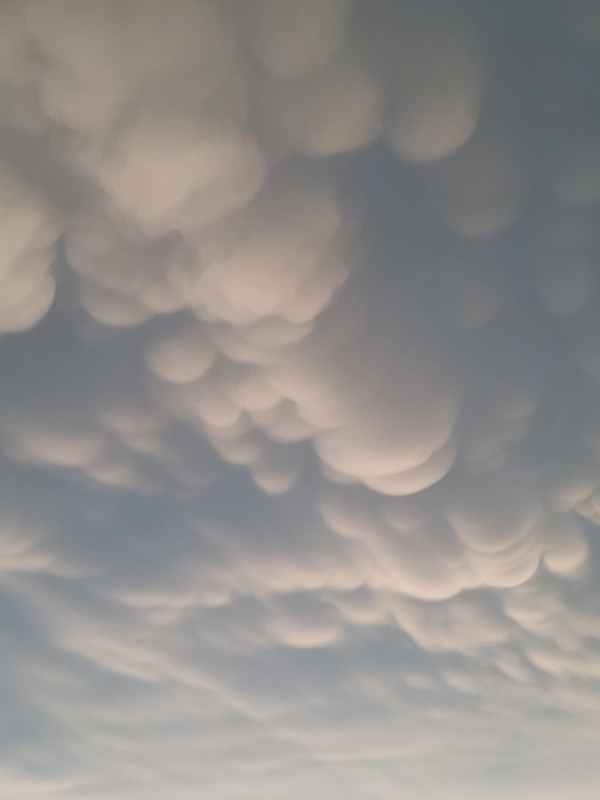
- Do a little reading for your Mother Culture. Basically anything I’ve seen by Eric Sloane is wonderful. I read his Weather Almanac years ago and learned so much. I was ecstatic the first time I saw mammatus clouds and knew it meant a big storm coming! If you’re using AmblesideOnline as your curriculum, Year 7 includes one of his books.
- Discuss and prepare as a family for weather events unique to your area. For our family, this means road closures due to blizzards, black ice, and wind. We need to make sure we have food/ingredients/water on hand, as well as snow gear and a shovel packed in the car whenever we travel. A lot of our camping gear can help with emergency measures: sleeping bags, solar lanterns, propane stove, etc. (This reminds me that my husband and I should also talk about a generator and firewood, however.). All of that may be completely irrelevant to your family – maybe it’s a discussion on hurricanes, or tornadoes, or heat index.
Now that it’s all written out, there’s so much to explore! Get outside, look around, pick a couple experiments, and enjoy 🙂
Happy nature study to you all!
 A Little Golden Thread